News
We will constantly surpass ourselves to create value for clients, strive for winning the long term trust from clients with better products and services!
Using Soil Sensors to Solve Agricultural Problems
Terrace Mile Co., Ltd. has developed and promotes "RightARM," an IoT-based agricultural data analysis service. Murata Manufacturing Co., Ltd. has been supplying soil sensors to Terrace Mile for continuous measurement of soil and water quality. Regarding the results achieved through the collaboration between the agricultural consulting firm Terrace Mile and Murata, we interviewed Terrace Mile's Representative Director Yuichi Ikoma and Customer Success Manager Hiroki Watanabe.
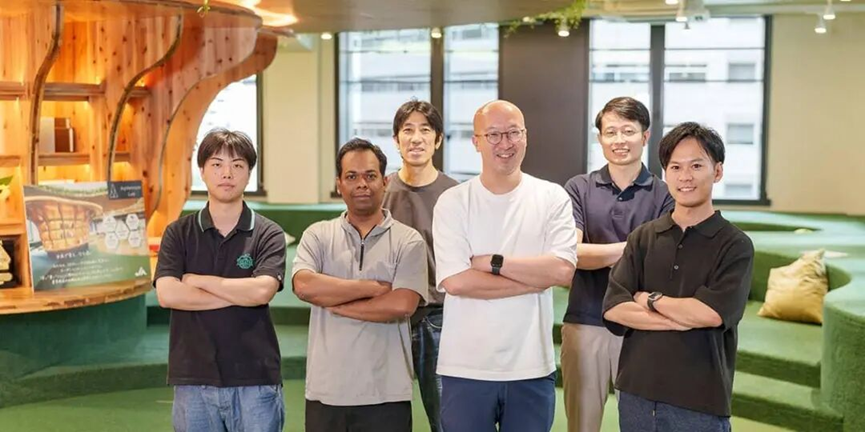
The "RightARM" team for IoT-based agricultural data analysis service
01
Why Choose Soil Sensors?
When considering the environment affecting crop growth, we think of factors like sunlight duration, CO₂ concentration, and the balance of temperature and humidity. Soil sensors measure the internal state of the soil. Why is it necessary to measure the internal state of the soil?
Mr. Ikoma explains: "Terrace Mile has been committed to using sensors to measure field conditions and collect data. We have also been collaborating with various sensor manufacturers, but these sensors only provided data from above the soil, such as sunlight, temperature, and humidity balance. It is said that, in fact, 20-30% of the factors affecting crop growth are above the soil, while 70-80% are within the soil. Therefore, to achieve stable and high yields of agricultural products, accurate soil data—internal soil data—is essential."
It is understood that Terrace Mile also tried methods like inserting metal plates into the soil for measurement and taking soil samples for analysis, but these were not accurate enough, and both sample quantity and sampling periods were limited. Moreover, continuous data collection was impossible. This meant important data for crop growth, such as soil moisture content, could not be obtained.
Previous measurement methods had shortcomings, leading Terrace Mile to seek a method that could accurately measure the internal state of the soil—the true condition of the soil.
Murata China
Liked by 7
02
Encounter with Murata's Soil Sensors
How did Terrace Mile learn about Murata's soil sensors?
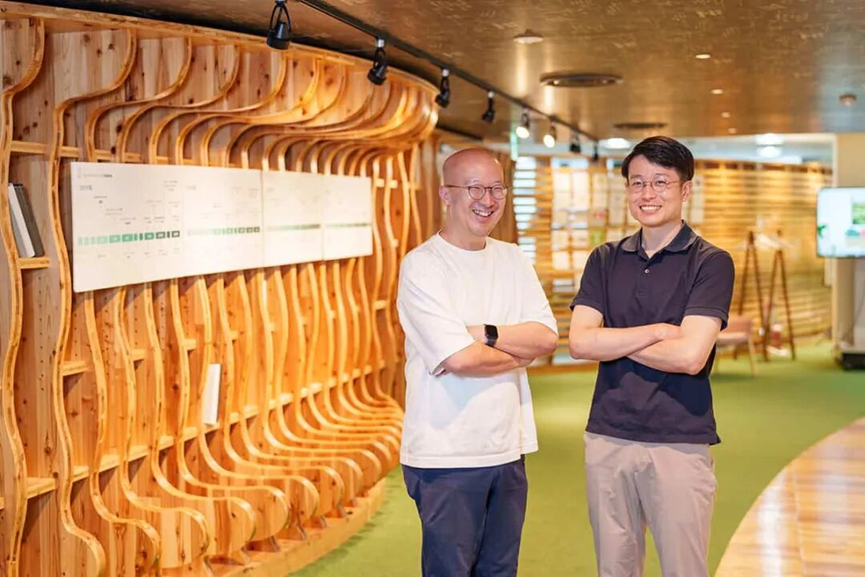
Mr. Ikoma and Mr. Watanabe, the interviewees
According to the introduction, at an event held in Fukuoka Prefecture in 2017, Terrace Mile had the opportunity to speak with a new business development representative from Murata Manufacturing and learned that Murata was planning to enter the agricultural field. When we explained to this representative the challenges Terrace Mile faced in measuring soil data, he indicated that Murata's soil sensors could conveniently and continuously collect more accurate soil data.
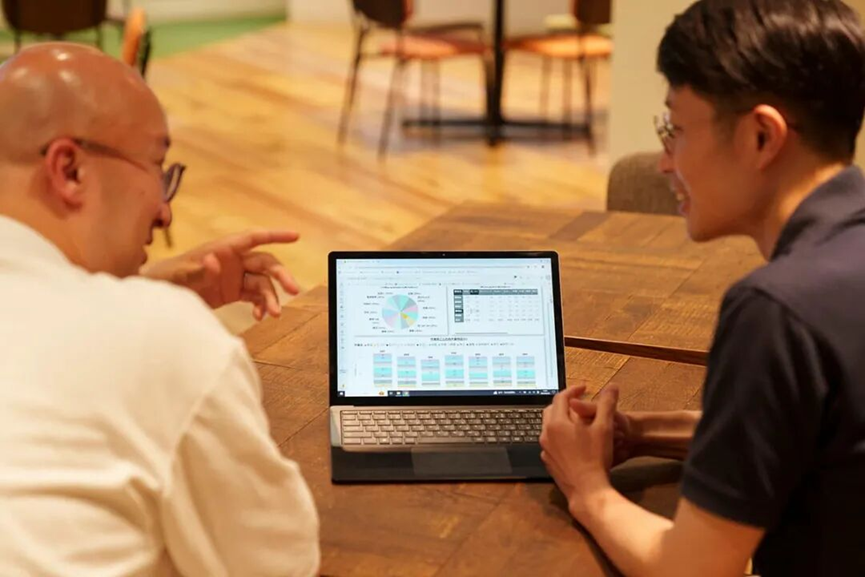
So, did using Murata's soil sensors enable the collection of accurate data?
Mr. Watanabe explains that soil environments vary from field to field. For example, the distance from the soil sensor to plants and irrigation hoses differs by producer. Therefore, initially upon implementation, there were situations where accurate data could not be obtained. Additionally, there were installation flaws, such as the soil sensor not making firm contact with the soil. However, because Murata's technical staff came to the site and provided guidance on installation methods, we quickly began collecting accurate soil data.
Furthermore, from the initial implementation stage, Murata's technical staff participated in workshops involving our company, the prefecture, the Japan Agricultural Cooperatives (JA), and producers. Murata's technicians gave lectures at these workshops on how to compare the collected data and what aspects to focus on. Afterwards, the two companies discussed not only data collection but also data analysis and more. Now, various types of analysis are possible. These analysis results can also be used as management data for farmers.
Installing the sensor and checking sensor data via smartphone
03
Results of "Co-Creation" Collaboration
Understanding the internal state of the soil means "visualizing the voice of the plants." Mr. Ikoma believes Murata's soil sensors excel in measuring the voice of the plants—soil data—with high precision. Simply inserting Murata's soil sensor into the soil allows for the collection of accurate data. For Terrace Mile, encountering this technology was a fundamentally transformative turning point.
What are your impressions of Murata's technical team?
Murata's technical staff listen to the opinions of farmers and agricultural advisors, providing explanations and guidance. Additionally, the fact that almost all questions are answered on the spot demonstrates a speed that makes us feel Murata's passion for its technology.
The co-creation collaboration has yielded fruitful results.
Mr. Ikoma states: "Terrace Mile focuses on analytical capabilities and software, while Murata develops easy-to-use, high-precision soil sensors. That two companies with different areas of expertise can collaborate and drive business forward is, I think, a significant achievement."
For example, even with the same data, the analysis methods used by Terrace Mile and Murata differ. Regarding suspicious data variations that Terrace Mile or agricultural advisors might overlook, Murata's technicians thoroughly questioned the data's reliability. By sharing data and providing knowledge in this way, the two collaborating companies were able to analyze from more perspectives.
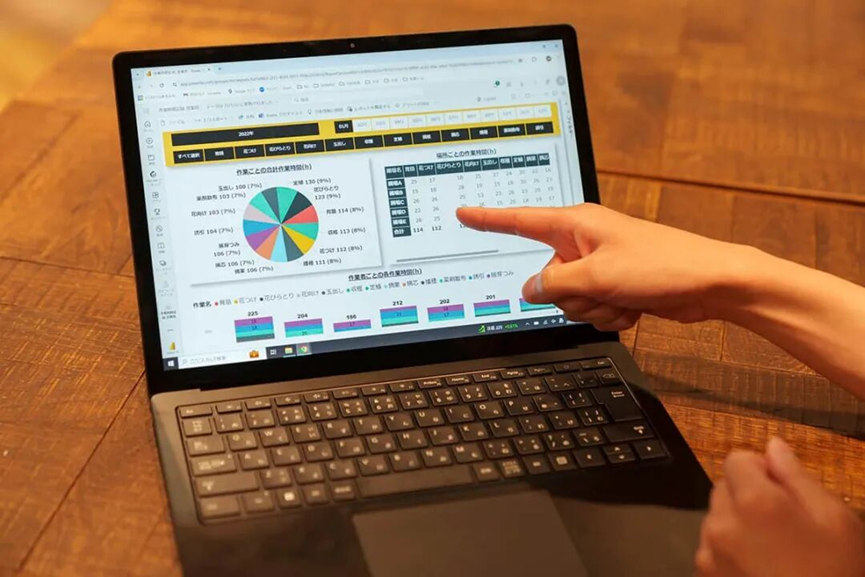
Initially, were farmers reluctant to use digital terminals like smartphones and computers for operations? How did this change later?
Mr. Ikoma explains that at the time of implementation, we had such concerns. However, once farmers realized the benefits of understanding soil conditions by viewing information displayed on digital devices, they began proactively requesting more detailed analysis results.
By fully utilizing the analysis results, yields increased—a clear benefit. Farmers now frequently use smartphone applications to check sensor data during the cultivation period. Moreover, they make improvements to irrigation amounts and the opening/closing of skylights based on this data. I believe these changes in awareness and behavior are very important.
Farmers' attitudes changed after seeing the analysis results
Recommended Reading:
Village Chronicles: Going Home to Farm? Don't Forget to Bring Murata's Soil Sensors
04
The Future of Collaboration
The effectiveness of agricultural policies is judged based on annual harvests. Although Terrace Mile and Murata have collaborated for a long time, we only judge results once a year, so many outcomes still require continued cooperation to assess.
Mr. Ikoma explains that Terrace Mile is currently testing analysis using an algorithm called "Trend Prediction Technology." This is a technology that estimates field conditions, and we believe future cooperation is needed in this trend prediction technology. Particularly important is that Murata's soil sensors are indispensable for building this technology. We hope to maintain a strong partnership moving forward and develop our respective businesses together.
Concluding the interview, Mr. Ikoma summarized:
Globally, the number of people engaged in agriculture shows a clear declining trend and is rapidly aging. Therefore, it is crucial to build a relationship between production and consumption that follows "producing and eating the food that is needed." To achieve this, macro-level design of production and consumption is necessary, and for such macro-design, data is essential—as are Murata's soil sensors.
The mission Terrace Mile aims to achieve in agriculture is to utilize Murata's soil sensors and provide Terrace Mile's analysis results as macro-design input to relevant Japanese ministries and agencies, as well as to future farmers.
Furthermore, Terrace Mile also plays a role in supplying food to regions with food shortages. If we can help other countries from Japan, then we should do so. By using data to visualize soil conditions and providing information on "what can be produced here," we can help increase yields. What is especially needed for this is high-precision soil sensors.
About E-Mantech
SHENZHEN E-MANTECH CO., LIMITED was established in 2014 with a registered capital of 10 million RMB.
Its predecessor was Shenzhen Hainengda Technology Development Co., Ltd., founded in 2005.
The company is committed to becoming the preferred trading platform for electronic components in the Chinese electronics industry.
Currently, it is a first level agent for Murata in Japan, an AVX agent, a Philips power agent, a KEC agent, a Prisemi agent for Xindao, a BPS agent for Jingfeng Mingyuan, a GPI agent for New Century,
a TELINK agent for Tailing, an SGX agent, and a WE smart agent. Our products cover fields such as communication, automotive, industrial control, medical, home appliances, lighting, power supply,
security, new energy, and consumer electronics; Our business covers regions such as Hong Kong, South China, East China, North China, Central China, and Southwest China.
Contact phone number: 0755-88352448 88352450
Official website: www.himantech.com
Official account: E-Mantech
QQ:800004227
Email: service@hi-mantech.com
Address: Room 1601, Block A, Coolpad Building, Intersection of Baoshen Road and Keyuan North Road, Xili Street, Nanshan District, Shenzhen
