
News
We will constantly surpass ourselves to create value for clients, strive for winning the long term trust from clients with better products and services!
Thermistors Drive Development in New Energy Vehicles and Energy Storage Applications
Thermistors Drive Development in New Energy Vehicles and Energy Storage Applications
As a critical type of temperature sensor, thermistors play an essential role in new energy vehicles (NEVs) and energy storage systems (ESS). With the rapid advancement of new energy technologies, the demand for battery system safety, stability, and efficient operation is increasing. Thermistors, with their high precision and fast response characteristics, effectively monitor and control temperature changes within systems, ensuring battery packs operate within an ideal temperature range. This extends battery life and improves overall system reliability.
This article explores the importance of thermistors in NEV and ESS applications, as well as the product features of thermistors from Murata Manufacturing Co., Ltd.
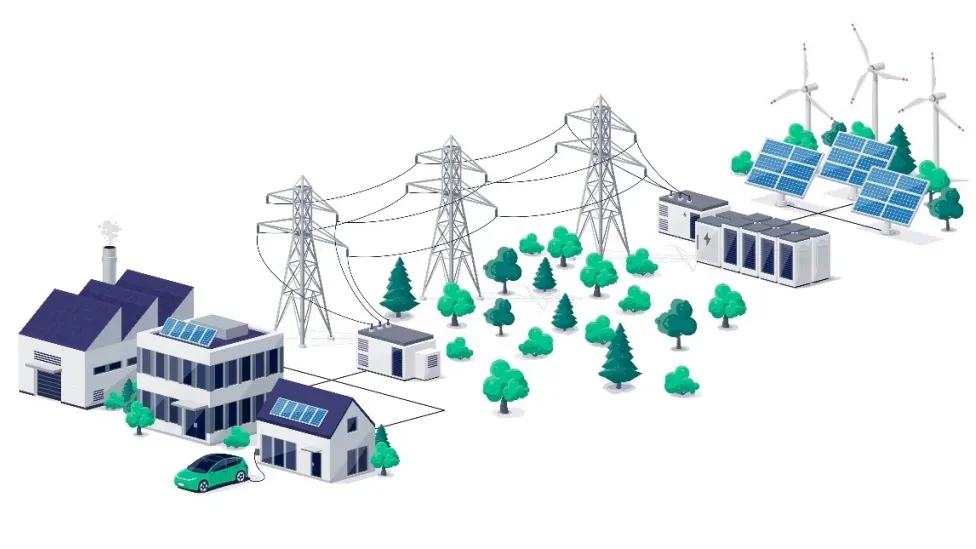
Growth of New Energy Vehicles Drives Rapid Increase in Lithium-Ion Battery Production
New energy vehicles have become the main driving force in the automotive industry, leading global vehicle production and sales. Taking China as an example, the country's green and low-carbon transition continues to deepen, with ongoing optimization of energy production and consumption structures. Driven by continuous technological innovation and a comprehensive industrial chain system, China's new energy industry has achieved relatively rapid growth. Among them, the production of NEVs has increased significantly year-on-year, and the output of supporting products such as charging piles and lithium-ion power batteries for vehicles is also growing rapidly. In addition, the photovoltaic (PV) industry chain has shown strong growth, with impressive increases in the production of key raw materials such as polysilicon, monocrystalline silicon, and ultra-clear glass for solar industrial use.
According to statistics, the total annual demand for lithium-ion battery packs for electric vehicles will increase from approximately 600 GWh in 2023 to about 1,000 GWh by 2025, reaching around 1,600 GWh by 2029. China, as the market leader, is rapidly expanding its battery manufacturing capacity. In 2023, China's battery capacity was approximately 1,200 GWh. According to official announcements, China's battery capacity will exceed 3,000 GWh by 2025 and surpass 4,500 GWh by 2030.
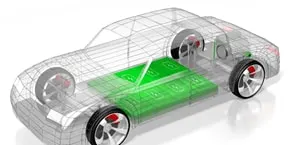
This situation has several major implications. One is that increased battery capacity may lead to lower prices for manufacturers. By 2023, the average price of battery packs had already dropped by 10–15%. Contemporary Amperex Technology Co., Limited (CATL) plans to sell batteries at less than $60 per kWh this year, and battery prices are expected to continue declining. Additionally, Chinese companies such as BYD and CATL are investing heavily in R&D and launching new and improved products, making it more challenging for new players to enter the battery industry.
NEV and ESS Applications Drive Demand for Thermistors
Thermistors are in high demand in PV and ESS applications. Systems such as battery management systems (BMS) for battery packs, power conversion systems, PV optimizers, and PV inverters all require thermistors for sensing and temperature control. The total number of thermistors used in an ESS depends on system scale. For example, a 5 MWh cabin may require up to 5,000 thermistors.
On the other hand, NEVs also have a high demand for thermistors. A single NEV requires approximately 150 thermistors, with the battery pack being the primary application area. On the analog front end (AFE) side, NTC thermistor interfaces are typically reserved for temperature measurement at the battery cell level.
Taking temperature measurement requirements for IC protection on the BMS board in vehicles as an example, thermistors can be used to detect the temperature of shunt resistors. When a shunt resistor solution is used for current detection in a battery module, thermistors are needed to measure the shunt resistor's temperature. This corrects for the influence of ambient temperature on current detection and also detects the temperature of balancing resistors. When passive balancing is used, balancing resistors dissipate heat to consume excess energy in the battery, thereby equalizing the charge or voltage among battery modules or cells. Additionally, thermistors play a critical role in detecting the temperature of battery cells in vehicles. This helps monitor temperature changes to detect thermal runaway and is also used to calculate battery state of health (SOH) and state of charge (SOC).
In ESS applications, particularly for ESS battery packs, the market mainstream is to use flexible printed circuits (FPC) or flexible die-cut circuits (FDC) combined with surface-mount device (SMD) NTC thermistors for temperature measurement. The function of NTC thermistors is to perform temperature monitoring and compensation. On the BMS board, they can detect the temperature of the electronic control unit (ECU), MOSFETs, electrical connections, and the surrounding environment. On the battery cell side, they are used to detect cell temperature to prevent overheating or to provide temperature compensation to adjust efficiency. Typically, several NTC thermistors are used on the BMS board. In battery cells, the ratio of NTC thermistors to battery cells ranges from 1:1 to 1:4, with 1:2 being the most common. An ESS BMS battery pack typically integrates about 100 battery cells, so it contains approximately 50 NTC thermistors.
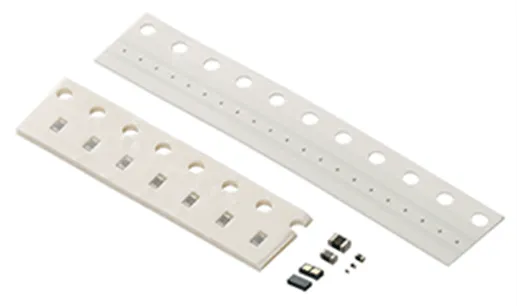
In the application of NTC thermistors in ESS BMS battery packs, lead-type thermistors have an additional frame structure (cable type) that offers high waterproofing and vibration resistance. However, over long-term use, the plastic parts of the cable can degrade and become corrosion points. Additionally, the unit price and assembly labor costs are higher. On the other hand, using FPC combined with SMD thermistors offers higher design integration, lower cost (assembly labor and unit NTC cost), and easier maintenance compared to lead-type thermistors. However, it requires additional FPC lamination processes and quality management considerations.
In PV and ESS product applications, equipment is often placed in harsh outdoor environments, subject to day-night thermal shocks, high concentrations of hydrogen sulfide (H₂S), and salt corrosion in coastal areas. When equipment maintenance or inspection requires opening cabinet doors, external environmental gases can enter the enclosure and corrode electronic components, or condensation can occur due to door opening and closing. Since product warranty periods are typically 5–10 years, with design lifetimes of 15–25 years, long-term reliability is essential. As NTC thermistors are critical temperature-sensing devices, they require high reliability. Murata's NTC thermistors are a suitable and widely accepted solution in the market.
NTC Thermistors: Ideal Temperature Sensors
Murata's NCU series NTC thermistors are SMD type and are used for temperature detection with high reliability. The NCU series is Murata's main thermistor series, suitable for the automotive market, which demands high reliability. These thermistors enable temperature detection and temperature compensation over a wide temperature range.
The NCG series NTC thermistors (SMD type) are used for temperature detection and are compatible with conductive adhesives. The NCG series is an SMD temperature sensor that can be used for various temperature detection and compensation applications. It is also suitable for automotive applications requiring high reliability. The NCG series is limited to conductive adhesive mounting and is not compatible with soldering.
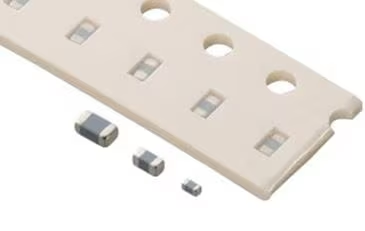
PTC Thermistors: Temperature Detection and Circuit Current Limiting
Murata's PTC thermistors (POSISTOR®) are devices whose resistance increases with temperature. They can be used for applications such as temperature detection and circuit current limiting. Murata's POSISTOR PTC thermistors are made of ceramic materials with excellent reliability and performance and cover products for different applications, including overcurrent protection and overheat protection.
The PRF series PTC thermistors (SMD type) are used for overheat detection. These chip-type PTC thermistors for temperature detection utilize the characteristic of a sharp increase in resistance above a certain temperature. They can be used for overheat detection of FETs, power ICs, and other heat-generating components. The PRF series utilizes a characteristic of rapid impedance change. Even in a simple circuit where multiple PTCs with multiple heating points are connected in series, overheat detection can be performed accurately. Therefore, the PRF series can reduce the number of IC ports and contribute to device miniaturization.
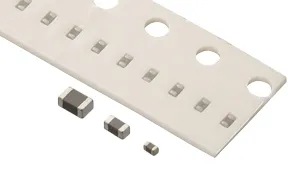
The PRG series PTC thermistors (SMD type) are used for overload current protection. These chip-type PTC thermistors for overload current protection operate quickly when an overload current such as a short circuit occurs, eliminate the overload current state, and allow the device to automatically return to its initial state repeatedly. Because they are made of ceramic materials, they offer high reliability. The time from short circuit occurrence to protection activation is very short, enabling mechanical maintenance-free operation and improved safety. Compared to organic PTC devices with similar characteristics and chip resistors, they withstand high voltage and high power capacity while achieving product miniaturization, contributing to equipment downsizing.
The PRG series can also be used as resettable fuses after an abnormal condition is resolved. Their compact design saves mounting space on the PCB. Once mounted on the PCB and energized, they exhibit stable characteristics. Due to their high power capacity, they can be used as small current-limiting resistors. They also comply with safety standards such as UL (E137188), VDE, and TUV.
Conclusion
Thermistors play an indispensable role in NEV and ESS applications. They not only provide critical temperature monitoring and protection functions for battery management systems but also enhance overall system safety and efficiency. As technology continues to advance, the accuracy and reliability of thermistors will further improve, providing strong support for the continued development of new energy technologies. Murata offers a comprehensive range of thermistor product lines that meet the diverse safety requirements of NEV and ESS applications.
bout E-Mantech
SHENZHEN E-MANTECH CO., LIMITED was established in 2014 with a registered capital of 10 million RMB.
Its predecessor was Shenzhen Hainengda Technology Development Co., Ltd., founded in 2005.
The company is committed to becoming the preferred trading platform for electronic components in the Chinese electronics industry.
Currently, it is a first level agent for Murata in Japan, an AVX agent, a Philips power agent, a KEC agent, a Prisemi agent for Xindao, a BPS agent for Jingfeng Mingyuan, a GPI agent for New Century,
a TELINK agent for Tailing, an SGX agent, and a WE smart agent. Our products cover fields such as communication, automotive, industrial control, medical, home appliances, lighting, power supply,
security, new energy, and consumer electronics; Our business covers regions such as Hong Kong, South China, East China, North China, Central China, and Southwest China.
Contact phone number: 0755-88352448 88352450
Official website: www.himantech.com
Official account: E-Mantech
QQ:800004227
Email: service@hi-mantech.com
Address: Room 1601, Block A, Coolpad Building, Intersection of Baoshen Road and Keyuan North Road, Xili Street, Nanshan District, Shenzhen
